On this page
Key takeaways
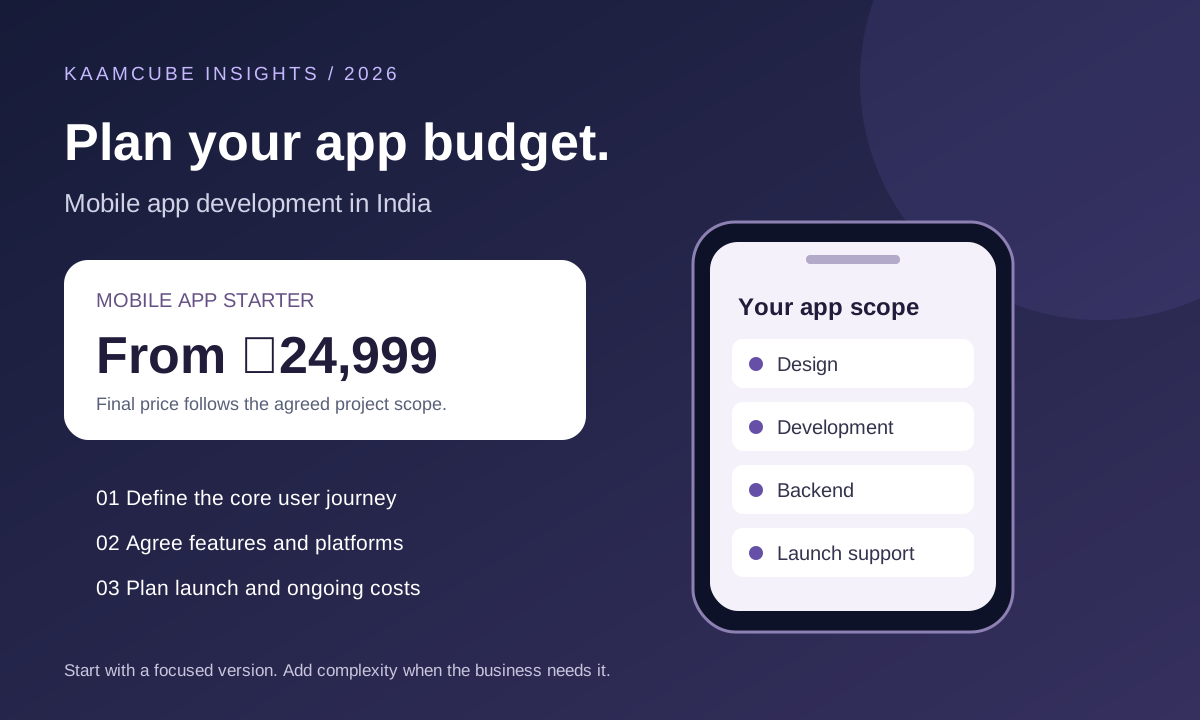
- Kaamcube's Mobile App Starter begins at ₹24,999. Your final price depends on the features, platforms and integrations agreed in the proposal.
- Budget for the whole service: customer screens, backend work, administration, testing and launch support.
- Confirm third-party charges, account ownership and maintenance coverage before development starts.
How much does a mobile app cost in India in 2026? At Kaamcube, the starting price is ₹24,999 for a basic version. The useful question is what your first version needs to do: a simple service enquiry flow and a delivery platform with live tracking are very different projects.
This guide explains the work behind a quote and the decisions that change your budget. Use it to prepare a brief, compare proposals and identify costs that continue after the app launches. The starting price is Kaamcube's advertised entry point, rather than a market average or a price for every app idea.
What you are paying for
An app is more than the screens on a phone. It may also need a system to store information, an admin interface for your team and connections to existing business tools. Ask for a quote that separates these responsibilities clearly.
| Work area | What to define | What increases the scope |
|---|---|---|
| Design | User journeys, screens, branding and revisions | More user roles, custom interactions and additional design rounds |
| App development | Platforms, features and supported devices | Separate platform requirements, device features and offline behaviour |
| Backend and admin | Accounts, data, permissions and staff workflows | Complex reporting, multiple user types and real-time updates |
| Integrations | Payments, messaging, maps and existing systems | Several external services or incomplete documentation |
| Testing and launch | Test devices, acceptance checks and submission responsibilities | More devices, complex journeys and additional release requirements |
Understanding the ₹24,999 starting price
The Mobile App Starter is intended as a starting point for a basic version. Kaamcube works on e-commerce, service booking, education, taxi booking and delivery apps, but each category can contain very different levels of complexity. The category name alone does not define what fits the starting budget.
After a discovery call, the proposal should set out the included screens, user roles, platforms, backend requirements, integrations and acceptance criteria. Confirm whether an admin panel and each requested feature are included. A complete marketplace with customer, driver and merchant workflows needs its own scope and quote.
Kaamcube's service includes help preparing store listings and submitting apps, with developer accounts registered in the client's name. Confirm the platforms covered by your quote, account responsibilities and submission requirements before work begins. Store approval is a separate review process.
Features that change your app budget
One user journey or several
A customer browsing services and submitting an enquiry is one journey. Add staff assignment, provider availability, order management and administrator permissions, and the project needs more screens, rules and tests. List each user type and what that person must be able to do.
Payments and business integrations
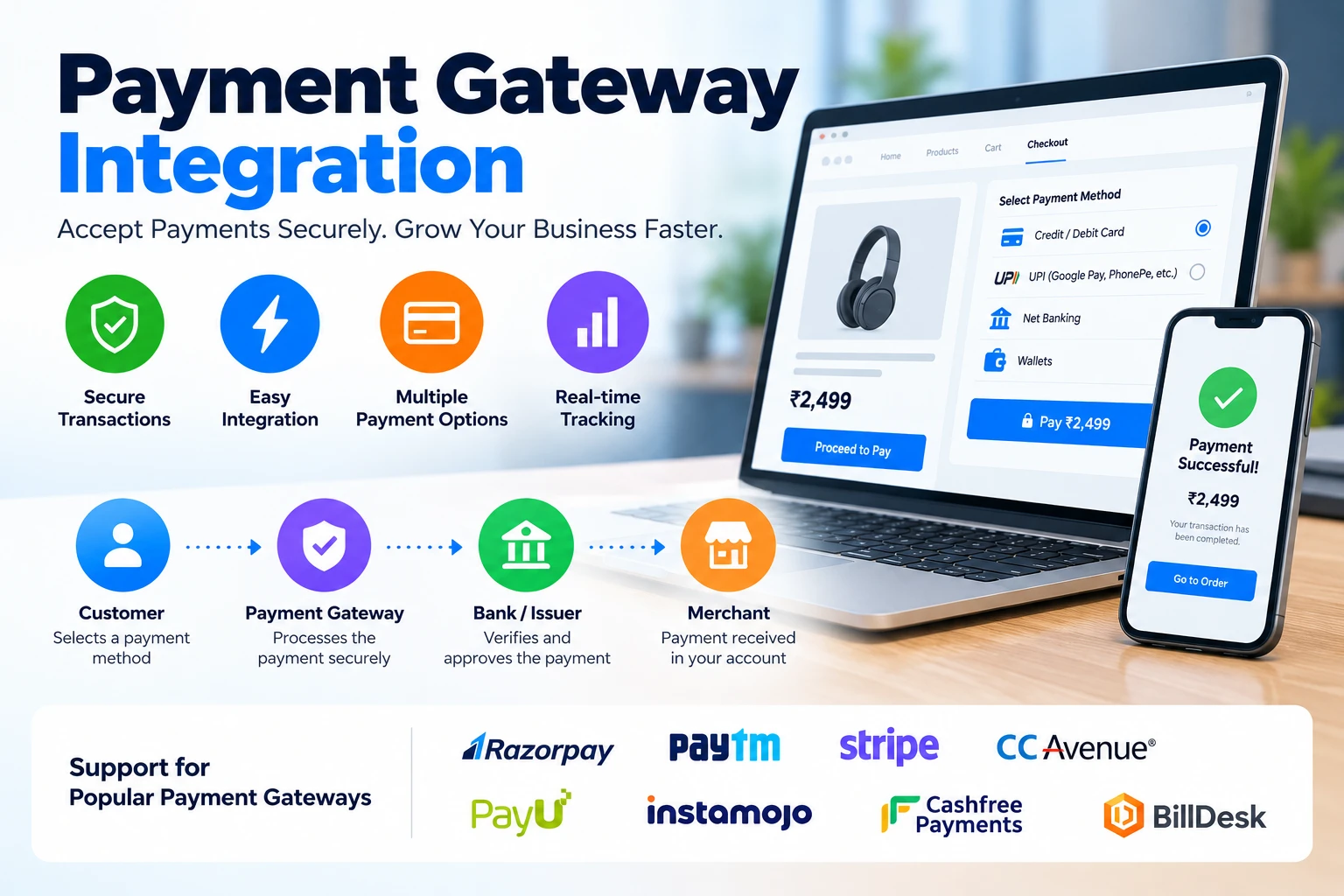
A payment flow involves more than a checkout button. Define order status, payment confirmation, failed transactions and how your team handles refunds or reconciliation. If the app connects to a CRM, ERP or existing website, identify the system and available interfaces early. Our API integration services cover this area of work.
Live updates and offline use
Location tracking, chat, instant order status and offline editing introduce additional behaviour to design and test. Explain when information must update, what happens without connectivity and how conflicts should be handled. Include these requirements in the brief rather than adding them during final testing.
Costs to confirm beyond development
Ask which charges are included, paid directly by you or billed separately. Avoid comparing a development-only figure with a proposal that includes hosting and support.
- Store accounts: confirm registration costs and any renewals directly with the relevant platform when preparing your launch budget.
- Hosting and storage: identify who runs the backend, how backups work and how usage affects the bill.
- Third-party usage: check charges for messaging, maps, email, payment processing and other external services you select.
- Maintenance: distinguish bug fixes from new features, design changes and updates required by platforms or external services.
- Taxes and renewals: ask whether applicable taxes and recurring licences are included in the written price.
Kaamcube advertises six months of free maintenance after launch, followed by optional maintenance plans. Confirm the start date, covered work, support process and exclusions in your proposal so your operating budget is clear.
Prepare a brief that leads to a useful quote
- Describe the problem: who uses the app and what task should become easier?
- Choose the first version: separate launch essentials from features that can wait.
- List users and platforms: include customers, staff, administrators and any other roles.
- Share existing systems: identify websites, software, data and brand material the project must use.
- Define completion: agree how features will be demonstrated, tested and accepted.
- Confirm handover: document account access, source code, data ownership and ongoing support responsibilities.
Ready to discuss your idea? Share your app brief with Kaamcube for a conversation about scope, price and delivery. You can also explore the MazdoorHouse app project as an example of our mobile work.
Frequently asked questions
Can I build an app for ₹24,999?
Kaamcube's Mobile App Starter begins at ₹24,999 for a basic version. Whether your requirements fit that budget depends on the agreed features, platforms, backend and integrations. Confirm the included scope in a written proposal.
Does the starting price cover every app type?
No. E-commerce, booking, education and delivery apps can vary greatly in complexity. Multiple user apps, live tracking and complex operations need an individual scope and quote.
How long does app development take?
Kaamcube publishes an estimated 8–16 weeks depending on features. The project schedule should account for design approvals, content, integrations, testing and submission work, with a timeline confirmed after discovery.
Will my app work on Android and iOS?
Kaamcube develops for Android, iOS and cross-platform projects. Agree the supported platforms and any platform-specific requirements in your proposal; do not assume both are included in every starting-price scope.
What happens after launch?
Kaamcube advertises six months of free maintenance, then optional maintenance plans. Confirm the covered work and separately budget for hosting, external services and any new features.
Who owns the app and accounts?
Developer accounts are registered in the client's name. Your agreement should also state source-code handover, ownership of custom work, access to hosting and data, and any third-party licence conditions.